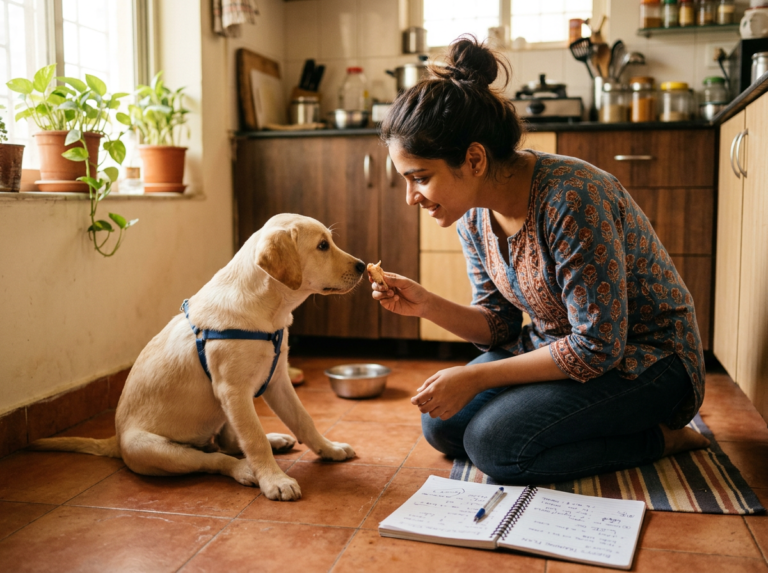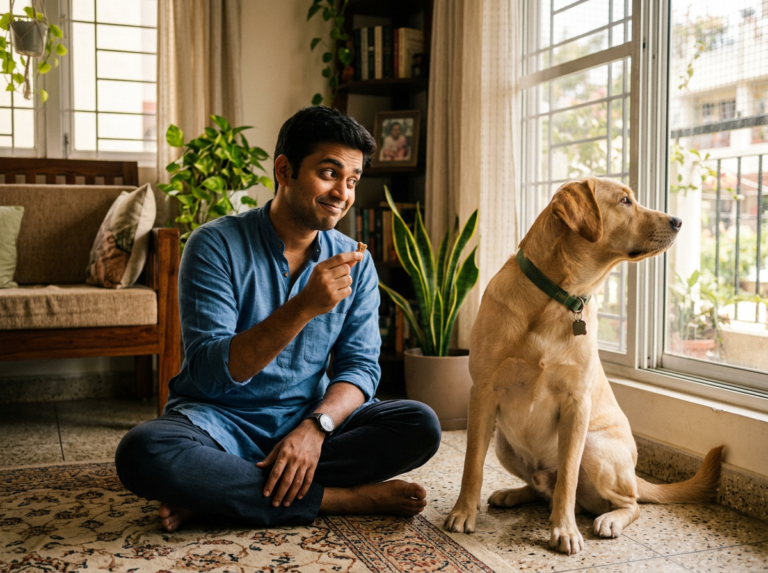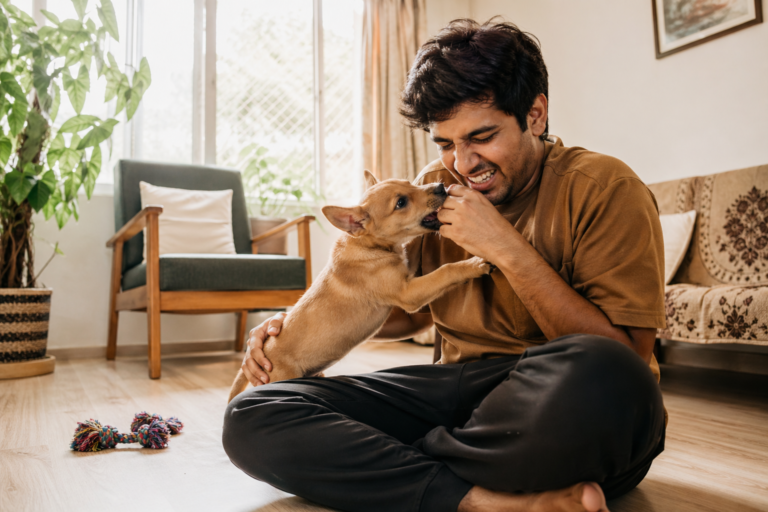
An Age-by-Age Guide That Actually Works
By Harshad | Founder, Indieedogs | Puppy Training & Behaviour Specialist
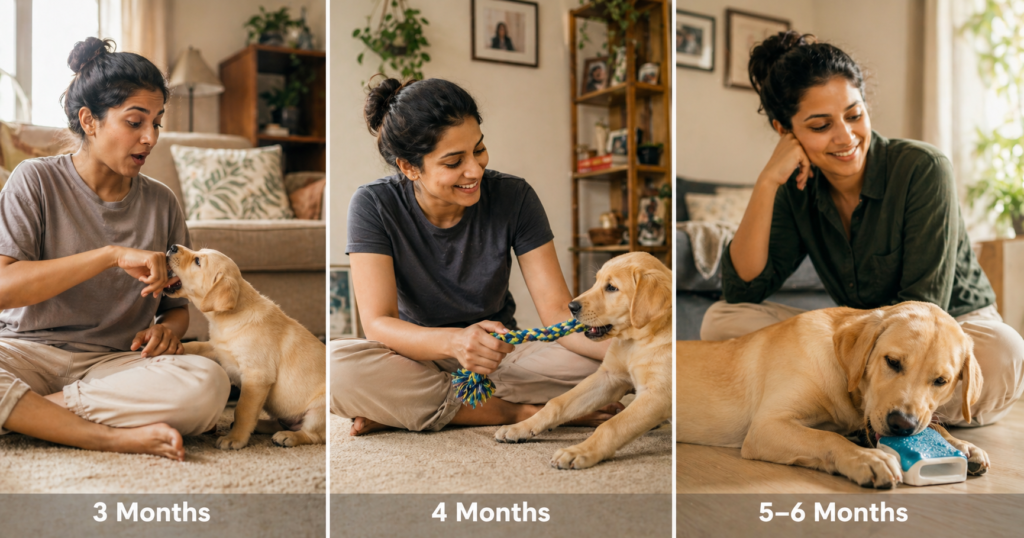
Here’s the thing nobody tells you when you bring a puppy home: puppy biting doesn’t feel the same at 3 months as it does at 5 months. The intensity changes. The reason behind it changes. And most importantly — what works to stop it changes too.
I’ve worked with hundreds of pet parents across India, and one of the most common frustrations I hear is: “I tried everything — nothing worked.” When I dig a little deeper, almost always the issue isn’t effort. It’s timing. They were using a 3-month strategy on a 5-month dog. Or expecting 5-month results from a 3-month puppy.
This guide is built around one simple idea: the right method at the right age makes all the difference. Whether you’re dealing with a mouthy 3-month-old Labrador or a teething 5-month Golden Retriever who seems to chew everything in sight — I’ve got you covered. Let’s go age by age.
1. Why the Method Matters at Different Ages — Not All Biting Is the Same
Most puppy training content treats biting as one single problem with one single solution. It isn’t.
Puppy biting between 3 and 6 months goes through distinct phases, each driven by different developmental forces. Using the wrong approach for the wrong phase is like giving cough syrup to someone with a broken arm — it’s not going to help.
| 📌 What’s Driving the Biting • 3 months: Exploration & play — no concept of pressure limits • 4 months: Testing boundaries — watching what reactions they get • 5–6 months: Teething — physical discomfort drives the urge to chew and bite | 🎯 What the Training Needs to Do • 3 months: Teach the concept of ‘too hard’ through clear feedback • 4 months: Reinforce the lesson consistently — no exceptions • 5–6 months: Provide physical relief while maintaining the boundary |
Understanding this distinction is what separates pet parents who see real improvement within 2–3 weeks from those who are still frustrated at month 6. Keep this framework in mind as we go through each age.
| 🔑 Golden Rule |
| You are not trying to stop your puppy from using their mouth entirely. |
| You are teaching them HOW to use it — with the right pressure, on the right things. |
| That’s bite inhibition. And the approach shifts as your puppy grows. |
2. What to Do at 3 Months — Early Bite Inhibition Through Yelp and Pause
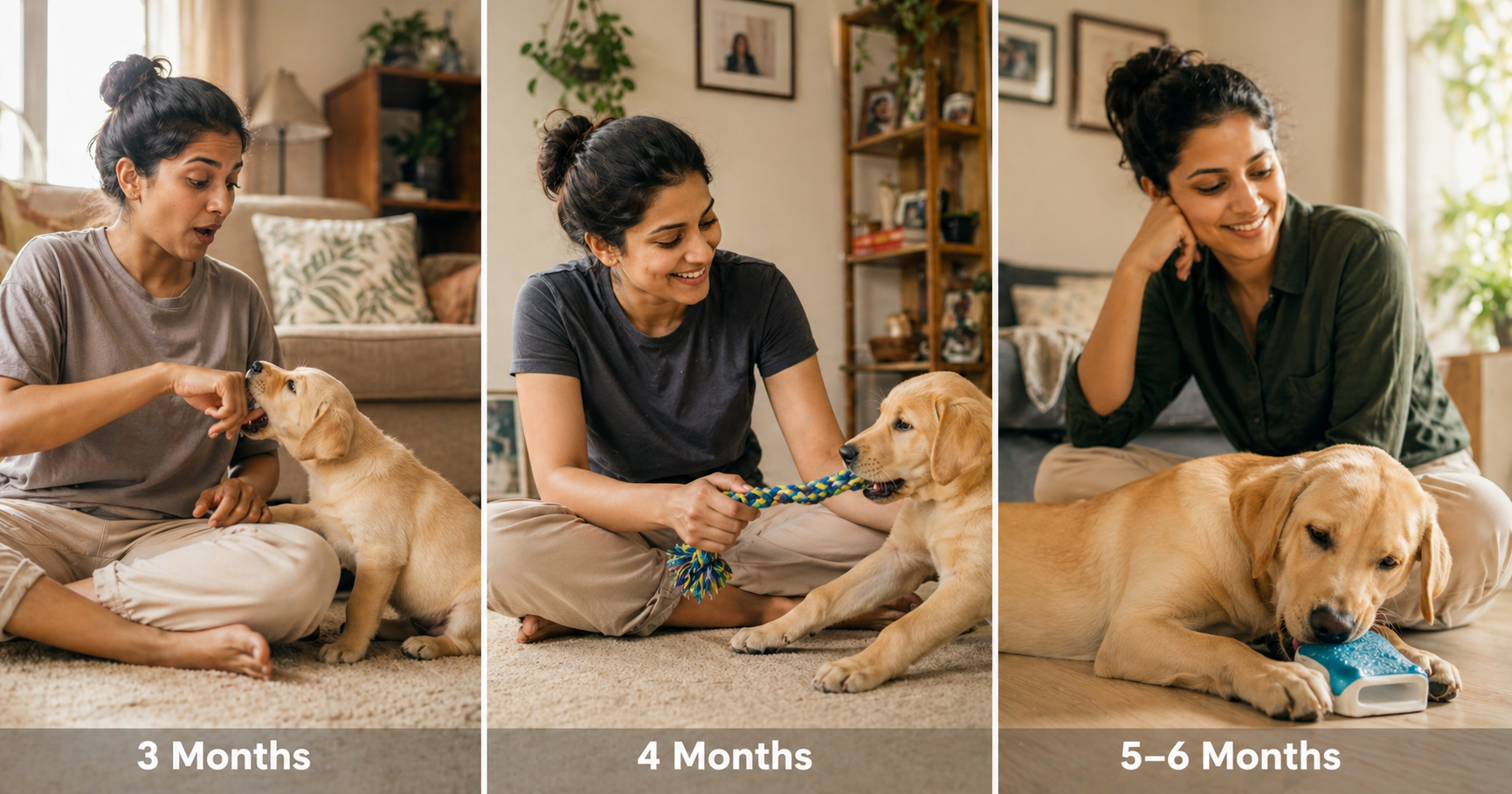
| 3 Months Old Foundation Phase — Your puppy is learning what ‘too hard’ feels like for the first time. |
At 3 months, your puppy is brand new to the world. They bite because that’s literally how they experience everything around them — your hands, your ankles, your furniture, your shoelaces. All of it goes in the mouth.
The goal at this stage isn’t to stop all biting. It’s to introduce the concept that hard biting ends playtime. That’s it. Simple, but it has to be done right.
The Yelp and Pause Method
When your puppy bites too hard, let out a sharp, short sound — “Ouch!” or “Ah!” — in a high-pitched tone. Then immediately freeze. Stop all movement, turn your body slightly away, and completely disengage from play for 20–30 seconds.
Don’t make it dramatic. Don’t repeat the sound. One clear reaction — then silence. That’s the message your puppy needs.
- React to the bite — one sharp sound, then go completely still
- Look away — no eye contact, no talking, no touch for 20–30 seconds
- Resume play calmly — don’t make a fuss about starting again
- React again if the hard bite happens — same consistent response, every time
- Have a toy nearby — the moment you feel teeth on skin, redirect to the toy immediately
At 3 months, the yelp and pause is the most powerful tool you have. It speaks the language your puppy already understands from their litter — because that’s exactly what their siblings did when the bite was too hard.
What About Redirecting to Toys?
Yes — always have a rope toy or soft chew toy within arm’s reach during every play session. The moment your puppy goes for your hand, offer the toy instead. You’re not punishing; you’re giving them a legal outlet. At 3 months, they’re very responsive to redirection. Use it every time.
| ⏰ Realistic Expectation at 3 Months |
| You will not see perfect results overnight. That’s not how it works. |
| What you WILL see in 1–2 weeks of consistency: fewer hard bites, quicker redirection to toys, |
| and a puppy that starts to pause before biting — even if just for a second. |
| That pause is the beginning of self-regulation. It means it’s working. |
3. What to Do at 4 Months — The Consistency Phase (Why Most Parents Give Up Too Early)
| 4 Months Old Consistency Phase — Your puppy is testing whether the rule still applies. |
This is the phase where I see most pet parents either break through — or give up. And honestly? Most give up right before it works.
Here’s what’s happening at 4 months: your puppy has started to understand that hard biting ends playtime. But now they’re testing it. Testing whether you’ll react the same way when you’re tired. Whether your partner reacts the same way you do. Whether the rule applies during evening excitement when everyone’s home and energy is high.
They’re not being manipulative — they’re just doing what all young creatures do. Checking the edges of the map.
What Consistency Actually Looks Like
At 4 months, the method is the same as at 3 months — yelp, pause, redirect. But now, zero exceptions matter more than ever. Every single hard bite must get the same reaction, from every person in the house.
- If you’re tired and laugh it off just once — that’s enough to confuse the lesson
- If one family member thinks it’s cute and lets it slide — the puppy gets mixed signals
- If you skip the reaction because you’re on a call or distracted — you’ve just taught your puppy the rule isn’t reliable
I know it’s exhausting. Especially when you’ve had a long day and your puppy is bouncing around at 9pm. But this is the most important two-week window in puppy biting training. Stay the course.
Upgrade: Start Lowering the Threshold
At 3 months, you were only reacting to hard bites. At 4 months, it’s time to start tightening the rule. Begin reacting to medium-pressure bites too. You’re progressively raising the bar — teaching your puppy that even moderate pressure on human skin is not acceptable.
This takes another 1–2 weeks, but it’s how you get from ‘less hard biting’ to ‘genuinely gentle mouthing’ — which is the actual goal.
Add a Time-Out if Needed
If your 4-month puppy is biting with increasing intensity during play (which sometimes happens during evening zoomie sessions), a short time-out in a calm space — not a punishment, just a break — can help reset the arousal level. 60–90 seconds is enough. Bring them back calm, and resume calmly.
| 📊 The 4-Month Reality Check |
| Most pet parents report this phase as the most frustrating. |
| The biting hasn’t stopped yet, but the foundation is being laid. |
| If you’re 2 weeks in and still seeing daily biting — that’s NORMAL. |
| If you’re 4 weeks in with zero change — check consistency first, then the method. |
| Inconsistency is the #1 reason puppy biting training fails. Not the technique. |
4. What to Do at 5–6 Months — Teething Peak and Chew Redirection
| 5–6 Months Old Teething Peak — The physical urge to bite is at its highest. Strategy shifts here. |
Here’s something most people don’t realise: at 5–6 months, the bite inhibition training you’ve been doing since 3 months is actually starting to take hold. Your puppy knows the rule. The problem now isn’t defiance — it’s discomfort.
Teething at this stage means your puppy’s adult teeth are pushing through. Their gums are sore, swollen, and desperately needing pressure relief. When they bite you at 5 months, it’s not always about play testing boundaries — sometimes they’re genuinely trying to soothe their mouth.
This changes what you need to do.
The Chew Redirection Protocol
Your job at this stage has two parts: maintain the bite inhibition boundary AND provide appropriate relief for teething pain.
- Keep 2–3 chew toys accessible at all times — rope toys, rubber Kongs, nylon chews
- Freeze wet toys or a damp rope overnight — the cold soothes inflamed gums significantly
- Stuff a Kong with peanut butter (no xylitol) and freeze it — gives your puppy 20–30 mins of focused chewing relief
- When they bite you, don’t just say ‘Ouch’ — immediately follow with ‘Here’ as you hand them the toy
- Increase daily exercise — a physically tired puppy has less energy to redirect into biting
At this age, the exercise point is especially important. Puppies at 5–6 months in India — especially in apartment settings — often aren’t getting enough physical output. A 20-minute morning walk plus an evening play session dramatically reduces the biting frequency. I’ve seen this work faster than any training technique for high-energy breeds like Labradors and German Shepherds.
What If Biting Is Still Hard at 5–6 Months?
If your puppy is still biting with significant force at this stage, it’s usually one of three things:
- Training hasn’t been consistent since 3–4 months — the foundation was never properly laid
- The puppy is chronically under-exercised and has excess energy with nowhere to go
- Something behavioural is going on — worth consulting a trainer for a proper assessment
Don’t panic. It’s fixable. But it does require going back to basics — yelp, pause, redirect — with airtight consistency, while also addressing the physical and exercise needs.
| 🧊 Quick Win: The Frozen Toy Trick |
| Take a rope toy, soak it in water, and freeze it overnight. |
| Offer it to your puppy first thing in the morning and before evening play sessions. |
| The cold reduces gum inflammation and the texture provides the chewing pressure they need. |
| Many pet parents see a 40–60% reduction in biting incidents within 3–4 days of doing this consistently. |
5. Common Mistakes That Actually Make Biting Worse — Without Parents Realising
I’ve seen well-meaning pet parents accidentally make puppy biting worse. Here are the most common ones — and how to fix them.
| ❌ Mistake 1: Using Hands as Toys Wiggling your fingers near your puppy’s face, letting them chase your hand, playing tug with your fingers — it all signals one thing: hands are for biting. Once that’s in their head, it’s hard to undo. ✅ Fix: From Day 1, all hand play stops. Every interaction that involves your puppy’s mouth should involve a toy, not your skin. |
| ❌ Mistake 2: Reacting With a Loud Scolding or Physical Correction Tapping the nose, scruffing, yelling ‘NO!’ loudly — these create anxiety without teaching anything. An anxious puppy bites more, not less. And with some puppies, it triggers defensiveness that can escalate into actual aggression. ✅ Fix: One calm ‘Ouch’, then disengage. The withdrawal of your attention is the punishment. Nothing else needed. |
| ❌ Mistake 3: Giving the Toy After the Bite (Too Late) Waiting until your puppy has already bitten you and is holding on before you offer the toy is too late. The bite already happened. The lesson you’re accidentally teaching: bite first, then get a toy. ✅ Fix: Pre-empt. The moment you see those eyes fixate on your hand or ankles — offer the toy before teeth touch skin. Proactive redirection beats reactive redirection every time. |
| ❌ Mistake 4: Inconsistency Across Family Members One person trains perfectly. Another laughs and keeps playing when bitten. The puppy learns: rule applies to Person A, not Person B. This doubles your training time — sometimes triples it. ✅ Fix: Run a 10-minute family briefing. Show everyone the yelp + pause method. Make the rule clear: same reaction, every time, everyone. |
| ❌ Mistake 5: Expecting Results Too Fast and Giving Up Puppy biting training takes 3–6 weeks of consistency. Most people see partial improvement in week 2 and assume it’s not working because the biting hasn’t completely stopped. They switch methods, confusing the puppy further. ✅ Fix: Pick one method and commit to it for a full 4 weeks before judging results. You’ll see meaningful improvement by week 3 if you’re consistent. |
6. 3 Things to Try This Week — and the Full Video Guide for Every Age
No matter how old your puppy is right now, here are three things you can start today that will make a noticeable difference within the week:
- Run a 5-minute ‘no hands near face’ rule — For the next 7 days, zero hand play near your puppy’s face. All play happens with a toy. Track whether biting frequency shifts. It usually does within 2–3 days.
- Time your reactions — The next time your puppy bites, count how quickly you react (under 1 second is ideal) and whether you’re consistent in the 3 interactions after. Most people are surprised how inconsistent their timing is.
- Add one frozen toy to the routine — If your puppy is 4 months or older, introduce a frozen rope toy or Kong today. Watch how their biting behaviour shifts during the 20 minutes after chewing on it.
These three changes — together — give you a real, honest picture of where your puppy is in the learning process. And they start moving the needle immediately.
| Age | Try This | Avoid This | Focus Word |
| 3 Mo | Yelp + pause + redirect to toy | Don’t shout or punish | REACT |
| 4 Mo | Consistent 20-sec time-outs every single time | Don’t skip reactions — even when tired | CONSISTENT |
| 5–6 Mo | Frozen toys + chew redirection + daily exercise | Don’t take the teething bait — redirect calmly | REDIRECT |