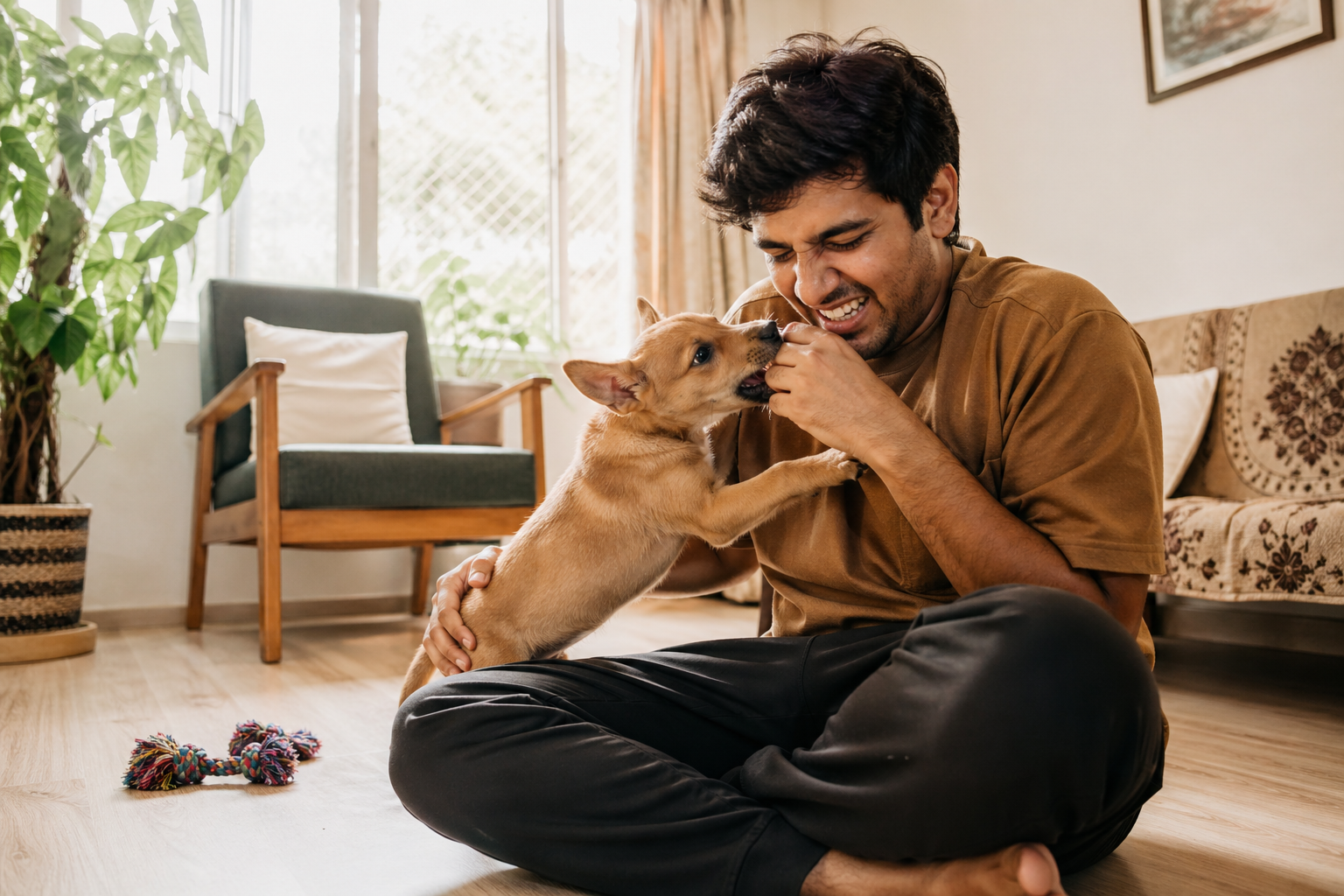
Understanding Bite Inhibition
By Harshad | Founder, Indieedogs | Puppy Training & Behaviour Specialist
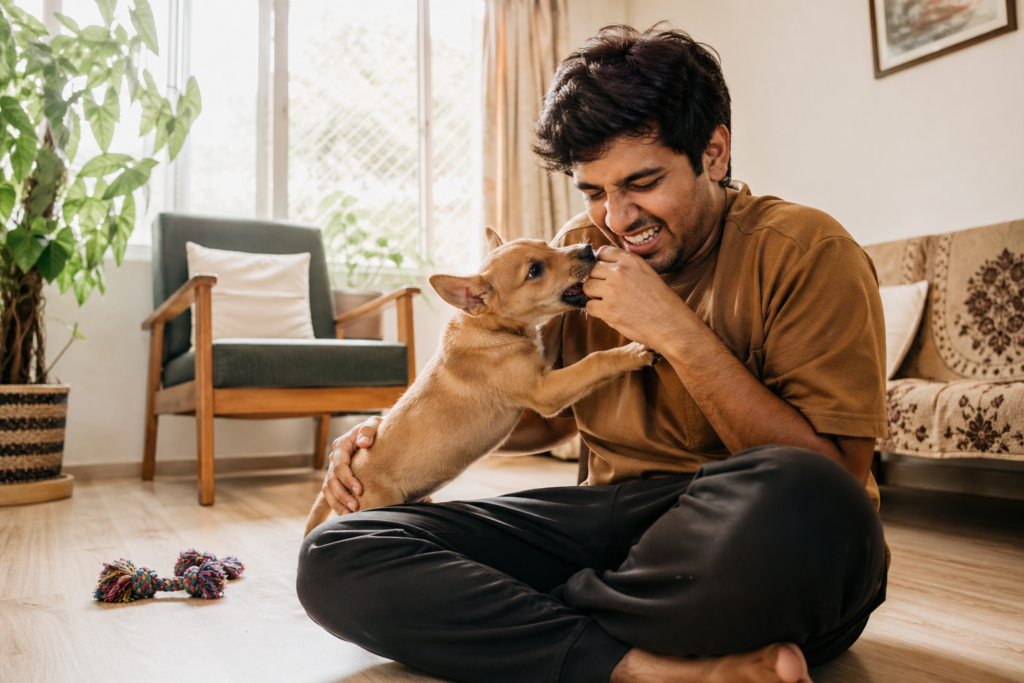
Those tiny teeth don’t feel so tiny anymore, do they? If puppy biting has turned every playtime into a bleeding-finger situation — you’re not alone. This is the number one thing I hear from new pet parents: “My puppy keeps biting me hard, and I have no idea what I’m doing wrong.” The truth is — you’re probably not doing anything wrong. But your puppy is missing one critical skill. It’s called bite inhibition. And once you understand it, everything changes.
In this guide, I’m going to break down why puppies bite so hard, what bite inhibition actually is, why some puppies bite more intensely than others, and exactly what’s normal at different ages. By the end, you’ll know what to do — and more importantly, what NOT to do.
1. Why Puppies Bite in the First Place — It’s Not Aggression & It’s Not a Bad Dog
Let’s start here because this is where most pet parents get stuck. The moment those sharp little teeth puncture your skin, your brain says: aggressive dog. Bad dog. Problem dog.
But here’s the reality: your puppy has no idea they’re hurting you.
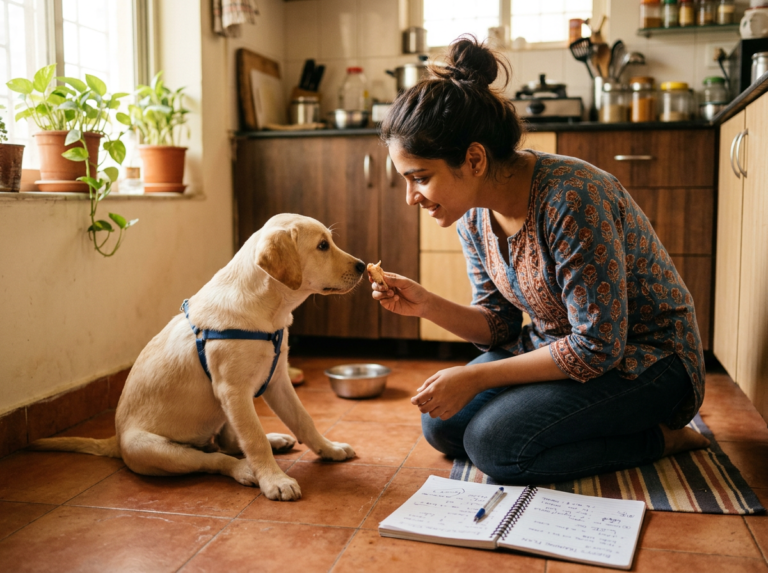
In the litter, biting is how puppies play, communicate, and explore the world. It’s completely normal dog behaviour from Day 1. They mouth their mother, bite their siblings, chew on everything they can find — because that’s how puppies learn about the world around them.
When a bite gets too hard, a sibling yelps and stops playing. That natural reaction teaches the puppy: too much pressure = game over. Over weeks of this back-and-forth, they learn to control how hard they bite. That’s bite inhibition — and it develops naturally inside a litter.
The problem? When your puppy comes home at 8 weeks, that learning process gets cut short. You become the sibling. And since you don’t instinctively yelp and walk away, your puppy has zero feedback to calibrate against.
| 💡 Key Takeaway |
| Puppy biting is not aggression. It is not a sign of a bad dog or poor breeding. |
| It is simply normal puppy behaviour that needs to be redirected and taught — patiently and consistently. |
2. What Bite Inhibition Is — and Why It’s the Most Important Skill Your Puppy Will Ever Learn
Bite inhibition is your puppy’s ability to control the pressure of their bite. It doesn’t mean teaching them never to use their mouth — it means teaching them to be gentle with it.
Think of it this way: a dog that’s never been taught bite inhibition doesn’t know the difference between gently mouthing your hand and actually biting down hard. They’re using the same pressure regardless. And when that dog is 6 months old and 20 kilograms? That becomes a serious problem.
Here’s why bite inhibition is considered the most important skill a puppy can learn:
- A dog with strong bite inhibition will pull back — even by instinct — in a stressful situation
- It reduces the risk of injury during play, especially with children
- It sets the foundation for all other training, because a dog that can self-regulate physically is also easier to train mentally
- It’s significantly harder to teach after 5–6 months — the window for learning it naturally is short
I’ve seen this firsthand with so many pet parents. They focus on sit, stay, and toilet training — all important — but skip bite inhibition because the biting feels “manageable” early on. Then at 5–6 months, with a bigger, stronger dog, they’re scrambling. Don’t be that person. Start now.
| 🎯 Why This Window Matters |
| The ideal period to teach bite inhibition is between 8 and 16 weeks. |
| After 6 months, the habit is more ingrained and requires significantly more effort to change. |
| Earlier you start → easier and faster the results. |
3. Why Some Puppies Bite Harder Than Others — Including Indie Dogs With High Prey Drive
Not all puppies bite with the same intensity. If you feel like your puppy bites especially hard compared to others you’ve heard about, there’s usually a good reason — and it often comes down to breed, temperament, and environment.
Breed & Prey Drive
Dogs bred for hunting, herding, or protection have naturally higher prey drive. This means their instinct to chase, grab, and bite is stronger than, say, a Toy Poodle.
In India, Labrador Retrievers, German Shepherds, Beagles, and Indian Pariah Dogs (Indie dogs) are among the most popular breeds — and all of them have moderate-to-high prey drive. An Indie dog in particular, shaped by thousands of years of street survival, can have sharp instincts that translate into intense play biting.
This doesn’t make them dangerous. It just means they need clearer, earlier bite inhibition training.
Lack of Litter Socialization
Puppies separated from their litter before 7–8 weeks often bite harder because they missed critical early feedback from siblings. If your puppy came home very early, you’re essentially starting from scratch — which is fine, but it requires more consistency from your end.
Overstimulation & Arousal
A puppy that’s overtired, overstimulated, or under-exercised bites more intensely. High energy + no outlet = biting everything in sight. This is one of the most common reasons Indian pet parents struggle — especially in apartment settings where the puppy isn’t getting enough physical and mental stimulation.
Reinforced Biting
If family members have been playing rough with the puppy using their hands, or laughing when they bite — the puppy has been taught that biting = fun attention. This takes a bit more time to undo, but it’s completely fixable.
| 🐾 Indie Dog Note |
| Indian Pariah Dogs are intelligent, alert, and have high instinctive drive. |
| They are also incredibly trainable when approached with patience and consistency. |
| Bite inhibition training works beautifully with Indie dogs — they respond quickly to clear feedback. |
4. The Age-by-Age Guide — What’s Normal at 8 Weeks, 3 Months, and 5 Months
One of the biggest mistakes pet parents make is not knowing what ‘normal’ looks like at each stage. So let me break it down clearly:
| Age | Biting Behaviour | Is It Normal? | What To Do |
| 8 Weeks | Bites everything — fingers, toes, shoelaces. Hard and relentless. | Yes, completely normal. | Start bite inhibition training from Day 1. |
| 10–12 Weeks | Still biting hard but starting to test responses. | Normal — they’re learning limits. | Consistent ‘Ouch!’ + redirect to toy. |
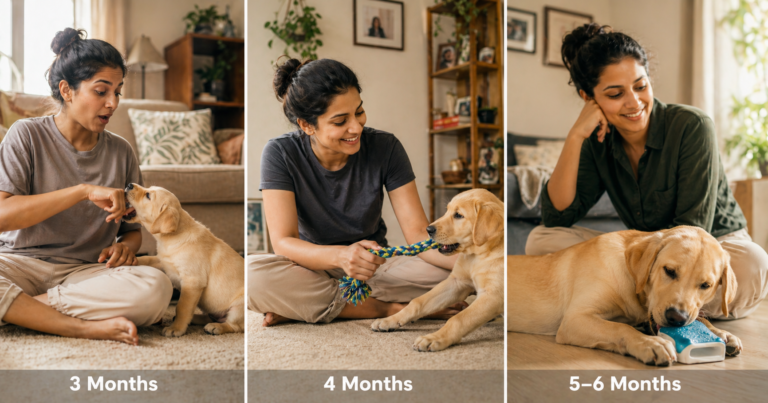
| 3 Months | Biting with more force; teething begins. | Normal. Teething adds urgency. | Introduce cold chew toys. Maintain training. |
| 4–5 Months | Peak teething phase. Biting intensifies. | Expected, but pressure must be reducing. | Increase exercise; freeze toys for gum relief. |
| 6–7 Months | Biting should soften significantly. | Soft mouthing is okay; hard bites are not. | If still biting hard — revisit training basics. |
The key thing to understand here: biting should naturally reduce in intensity and frequency as you consistently apply bite inhibition training. If your 6-month-old puppy is still biting as hard as they were at 8 weeks — that’s a sign training hasn’t been consistent enough, not that your dog is aggressive.
5. When to Be Concerned vs. When to Be Patient — The Warning Signs
Most puppy biting is completely normal and manageable. But sometimes, the biting pattern signals something that needs more attention. Here’s how to tell the difference:
| ✅ Be Patient — This Is Normal • Biting during play that stops when you react • Puppy gets distracted by a toy easily • Biting reduces after exercise • No growling or snarling with the bite • Puppy looks relaxed and wiggly after biting | ⚠️ Be Concerned — Consult a Trainer • Growling, snarling, or snapping during biting • Biting that draws blood repeatedly and without play context • Stiff body posture before/during biting • No improvement after 4+ weeks of consistent training • Guarding food, toys, or spaces aggressively |
The honest truth? Most pet parents who come to me worried about “puppy aggression” are actually dealing with completely normal biting — just without the right tools to manage it. Genuine aggression in young puppies is rare. What’s common is untrained biting that feels scary because it’s intense.
Trust your instincts, but don’t catastrophise. Start with training, be consistent for 3–4 weeks, and you’ll almost always see a dramatic change.
6. How to Start Teaching Bite Inhibition This Week
You don’t need equipment. You don’t need to wait for a formal class. You can start today. Here’s a quick-start framework:
- React to every hard bite — Say ‘Ouch!’ or ‘Ah!’ sharply and go completely still. Stop all movement.
- Remove yourself briefly — Turn away or get up and ignore your puppy for 20–30 seconds. No eye contact, no touch.
- Resume play — Come back calmly. Repeat the reaction every time the bite is too hard.
- Redirect to a toy — Keep a chew toy or rope nearby at all times. The moment they go for your hand, give them the toy instead.
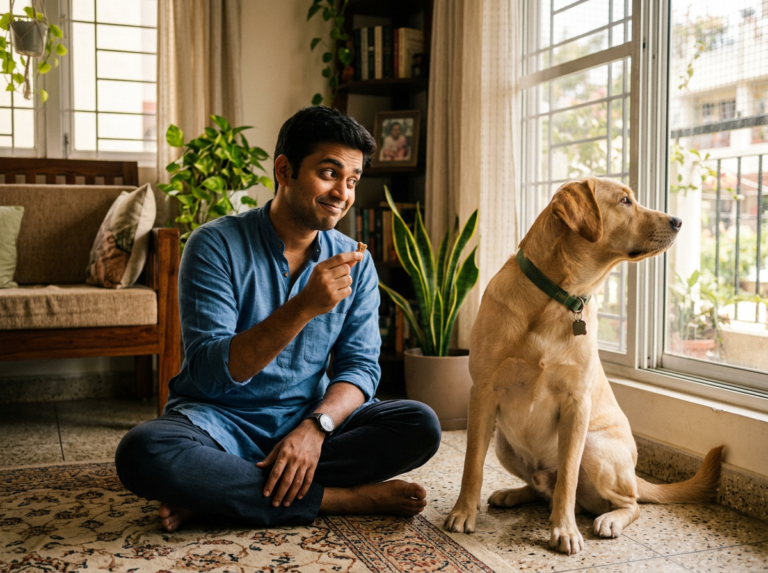
- Reward gentleness — When your puppy licks instead of biting, or takes something softly from your hand, mark it with a calm ‘Yes’ and give a small treat.
- Be consistent with everyone — All family members must react the same way. One person laughing it off undoes the work of everyone else.