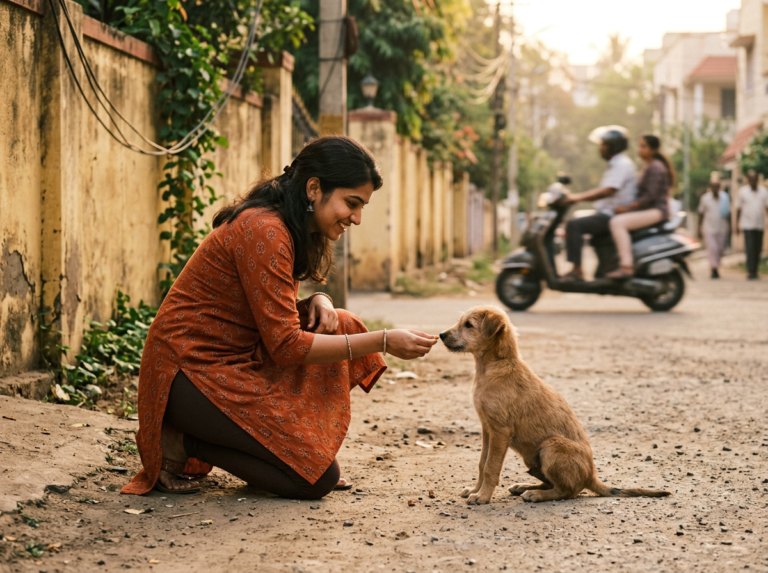
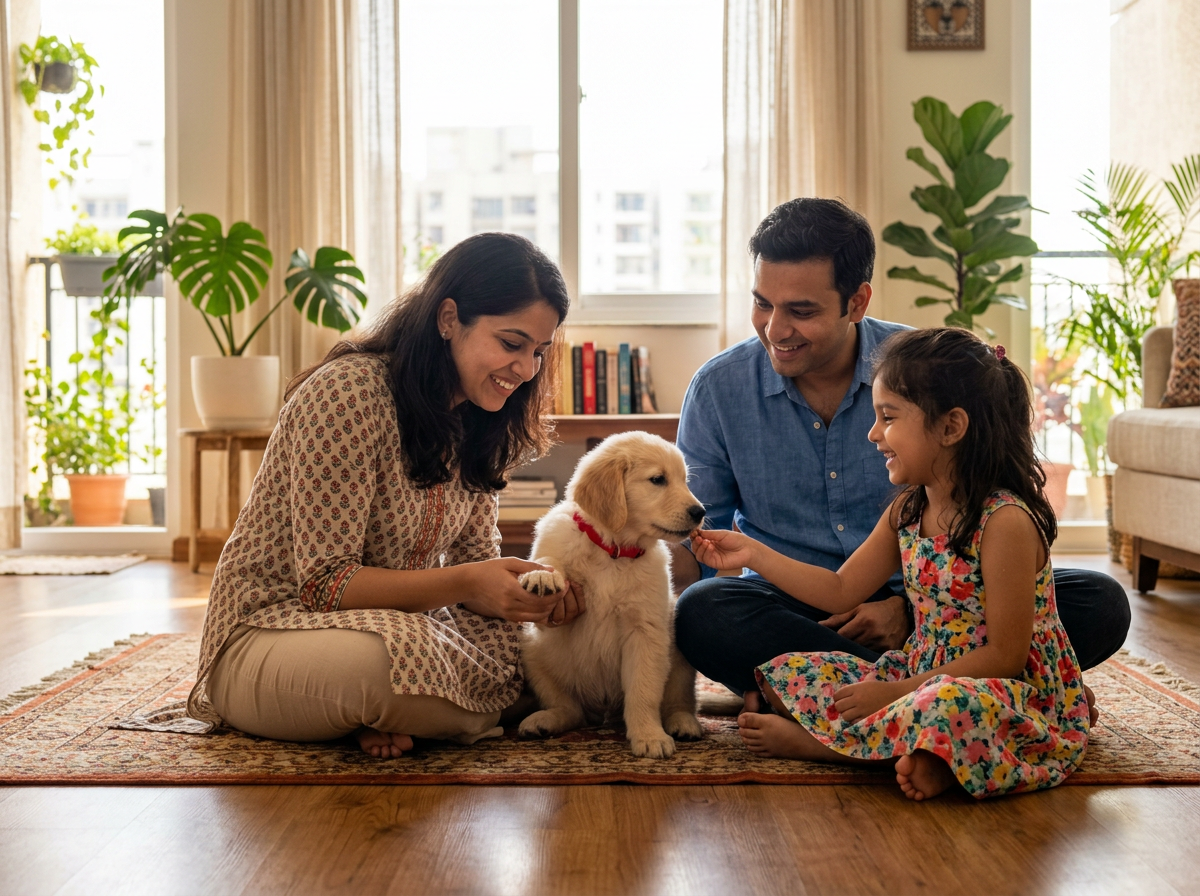
The 16-Week Window You Cannot Miss
By Harshad | Founder, Indieedogs | Puppy Training & Behaviour Specialist
If I could go back and give one single piece of advice to every first-time dog parent in India, it would be this: don’t wait for the vaccinations to be done before you start socialising your puppy.
I know that sounds counterintuitive. And I know most vets say ‘keep the puppy home until all vaccines are complete.’ I understand why they say it — there are real disease risks in India. But here’s what often gets lost in that conversation: the socialisation window doesn’t wait for vaccinations. It opens at 8 weeks and begins closing at 16 weeks. After that, making new things ‘normal’ for your dog becomes significantly harder — and sometimes impossible.
The result? Millions of under-socialised dogs across India — scared of strangers, panicked by Diwali firecrackers, unable to handle vet visits, reactive to everything on a walk. Not because their owners didn’t love them. Because nobody told them about the window.
This guide is that conversation. Let’s talk about what the window is, what to do during it — safely — and what’s at stake if you miss it.
1. What the Socialisation Window Is — and Why It Cannot Be Recreated After 16 Weeks
Between 8 and 16 weeks of age, a puppy’s brain is in a uniquely receptive state. Neuroscientists call it the critical period of socialisation. What that means practically: every new experience during this window gets filed by the brain as ‘normal.’ Every experience that doesn’t happen during this window gets filed, by default, as ‘unknown — potentially threatening.’
This is not a metaphor. There are measurable neurological changes happening during these weeks — synaptic pruning, myelination of neural pathways, and the calibration of the stress response system. The experiences your puppy has right now are literally shaping the architecture of their brain.
| Age | Phase | What’s Happening & Why It Matters |
| 0–3 Weeks | Neonatal | Puppy is with mother. Eyes and ears closed. All sensory input comes through touch and smell. No socialisation possible yet. |
| 3–5 Weeks | Transition | Eyes and ears open. Brain begins registering the world. Stays with litter. Breeder influences start here. |
| 5–8 Weeks | Primary (Litter) | Critical bite inhibition learning with siblings. Fearful stimuli begin registering. Should NOT be separated from litter before 7 weeks. |
| 8–12 Weeks | 🔥 PEAK WINDOW | The golden zone. Brain is maximally open to new experiences. Every positive exposure now shapes the dog for life. THIS IS WHERE YOU LIVE. |
| 12–16 Weeks | Fear Imprint Phase | Positive socialisation still very effective but fear responses become more pronounced. Any bad experience in this phase can have lasting impact — handle with extra care. |
| After 16 Weeks | Window Closes | Socialisation still possible but requires significantly more repetition and effort. What wasn’t introduced here is now harder to make ‘normal.’ This is not impossible — just much harder. |
The 8–12 week peak window is when the brain is maximally open. New things are exciting rather than scary. New people are interesting rather than threatening. This openness is temporary — and precious. Use every day of it.
The 12–16 week phase still matters enormously, but it comes with a complication: the fear response becomes more active during this period. Good experiences still build confidence — but bad experiences during this phase can leave lasting marks. This is why the 12–16 week period requires particularly careful handling.
| ⏰ The Window in Numbers |
| You have approximately 56 days — from Week 8 to Week 16 — to shape your puppy’s perception of the world. |
| That’s not a lot of time. It’s also plenty of time — if you use it intentionally. |
| The goal isn’t to expose your puppy to everything at once. |
| It’s to expose them to enough of the right things, in the right way, that the world feels safe rather than threatening. |
2. The Specific Sounds and Situations Indian Puppies Must Be Exposed to Early
| The India-Specific Socialisation Checklist This isn’t a generic list. These are the triggers that break Indian dogs — and the ones you must address before 16 weeks. |
Most international puppy socialisation guides mention things like ‘skateboard sounds’ and ‘men with beards.’ Useful, but not exactly your daily reality. An Indian puppy’s life involves a completely different set of triggers — and if they aren’t introduced early, these become the exact things that make your dog anxious or reactive as an adult.
Here is the Indieedogs India-specific socialisation checklist:
| 🏍️ Moving Vehicles | Examples |
| Key exposures | ✓ Scooters and motorcycles passing at varying speeds |
| ✓ Auto-rickshaws (engine + horn combination) | |
| ✓ Trucks and buses on main roads | |
| ✓ Bicycles — often silent and fast-moving | |
| ✓ Delivery bikes with large boxes | |
| 👥 People Varieties | Examples |
| Key exposures | ✓ Security guards in uniform — especially those with lathis or walkie-talkies |
| ✓ Delivery personnel with helmets and bags | |
| ✓ Workers in overalls — plumbers, painters, electricians | |
| ✓ Children of various ages including toddlers | |
| ✓ Elderly people with walking sticks | |
| ✓ People wearing dupattas, sarees, and kurtas that move in the wind | |
| 🔊 Indian Sounds | Examples |
| Key exposures | ✓ Pressure cooker whistle (inside the home — a uniquely Indian sound trigger) |
| ✓ All-India Radio and TV news channels at home | |
| ✓ Temple bells and azaan sounds during morning/evening | |
| ✓ Diwali firecrackers — introduce cracker sounds via YouTube first | |
| ✓ Loud honking at traffic junctions | |
| ✓ Construction sounds — drilling, hammering, mixer trucks | |
| 🐦 Animals & Wildlife | Examples |
| Key exposures | ✓ Crows — ubiquitous, loud, and very low-flying in Indian cities |
| ✓ Pigeons nesting on building ledges | |
| ✓ Stray dogs at a safe distance | |
| ✓ Stray cats — especially important for dogs with high prey drive | |
| ✓ Monkeys in areas where they appear near buildings | |
| 🏢 Environments | Examples |
| Key exposures | ✓ Building lifts — approach, sounds, doors, enclosure |
| ✓ Stairwells with echo and varying footsteps | |
| ✓ Building compound and gate area | |
| ✓ Petrol pumps — smell, noise, activity | |
| ✓ Parking areas and basements | |
| ✓ Veterinary clinic waiting room — critically important to normalise | |
| 👐 Handling & Touch | Examples |
| Key exposures | ✓ Mouth, ears, paws, and tail — handled by different people |
| ✓ Brushing and grooming introduction | |
| ✓ Collar and leash being put on and removed | |
| ✓ Being lifted and carried | |
| ✓ Nail trimming — desensitise tools first before use | |
| ✓ Being examined by a veterinarian — simulate this at home regularly |
How to Introduce Each Category Correctly
The rule is the same for every item on this list: start at a low intensity, pair with something positive (treats, play, praise), and keep your puppy’s body language relaxed throughout. If they freeze, try to move away, or show stress — you’ve gone too far, too fast. Back off and try again at lower intensity.
- Sounds: Start with recordings at low volume before real-world exposure
- People: Brief, calm interactions where the person ignores the puppy initially, then offers a treat
- Environments: Short visits first, increasing in duration only when the puppy looks comfortable
- Handling: Multiple short sessions daily — mouth, paws, ears, tail, being lifted
| 🔑 The Diwali Firecracker Prep — Start in Week 9 |
| Diwali is one of the most traumatic events in the calendar for under-socialised Indian dogs. |
| The good news: you can prepare your puppy for it — but only if you start during the window. |
| From Week 9 onward, play firecracker sounds on YouTube at low volume during meals. |
| Increase volume very gradually over several weeks. |
| A puppy that hears these sounds during their positive association window will be |
| significantly calmer during the real event — no matter how intense it gets. |
3. How to Socialise Safely Before Your Puppy Has Completed Their Vaccination Course
This is the tension that most Indian pet parents struggle with — and it deserves a direct, honest answer.
The concern is real. India has higher rates of parvovirus, leptospirosis, and distemper than many Western countries where most puppy advice originates. The disease risk from unvaccinated street contact is genuine. But the risk of missing the socialisation window is also real — and it’s a risk that lasts the dog’s entire life.
The answer isn’t to choose between health and socialisation. It’s to socialise smartly. Here’s what that looks like:
| Activity / Exposure | Safety Level | Guidance for Indian Pet Parents |
| Home socialisation — new sounds, handling, household experiences | ✅ Safe | Play pressure-cooker sounds, TV, doorbell. Handle paws, ears, mouth daily. |
| Carry-and-observe outdoor sessions | ✅ Safe | Carry your puppy in your arms to a busy road or market. Let them observe without ground contact. |
| Socialisation with vaccinated, healthy known dogs | ✅ Safe | Friends’ or family members’ fully vaccinated adult dogs in a clean private space. |
| Puppy classes with vet-verified healthy puppies | ✅ Safe | Reputable puppy classes require vaccination records for all attendees. Ground is controlled. |
| Balcony or building compound (own building only) | ✅ Safe | Your own building compound is relatively lower risk than public spaces. |
| Public parks where unvaccinated or unknown dogs visit | ⚠️ Caution | Assess local stray dog population and park hygiene. After first two vaccine rounds, risk is lower. |
| Building stairs and lift (avoid directly after strays) | ⚠️ Caution | Manageable risk. Avoid immediately after a stray dog has been in the space. |
| Direct contact with stray dogs | 🚫 Avoid | High disease risk before full vaccination — parvovirus, leptospirosis, distemper are real threats in India. |
| Puddles, public drains, and contaminated water | 🚫 Avoid | Leptospirosis risk is significant, especially in monsoon season in Indian cities. |
| High-traffic public footpaths where stray dog presence is frequent | 🚫 Avoid | Wait for full vaccination completion before extensive ground exposure in high-stray-density areas. |
The Carry-and-Observe Method — Your Most Underused Tool
This is the single most practical technique for Indian pet parents during the pre-vaccination period. Simply carry your puppy in your arms to any environment you want them to experience — a busy road, a market entrance, a park gate. Let them observe, smell, and hear everything — without any ground contact.
Done consistently from Week 8, this method allows your puppy to experience the chaos of Indian streets, the sounds of traffic, the sight of autos and scooters and crowds — all during the critical window, with zero disease risk. It’s not a perfect substitute for full ground exposure. But it’s vastly better than keeping them home entirely.
| 🩺 A Word on Vaccination Timing in India |
| Standard Indian vaccination protocol: First dose at 6–8 weeks (before or at the time puppy comes home). |
| Second dose: 3–4 weeks later (typically 9–12 weeks). |
| Third dose and rabies: Around 14–16 weeks. |
| Full protection: Generally considered complete 2 weeks after the final booster. |
| Discuss your specific puppy’s schedule with your vet — and frame it around the socialisation window. |
| A good vet will help you balance both priorities, not just one. |
4. The Difference Between Socialising With Experiences and Socialising With Other Dogs
These two things often get lumped together under ‘socialisation’ — but they’re genuinely different skills, with different timelines and different considerations. Understanding the distinction helps you prioritise correctly.
| 🌍 Socialisation With Experiences | 🐕 Socialisation With Other Dogs |
| What it is: Positive exposure to sounds, people, places, surfaces, objects, and situations. When: From the day puppy comes home (8 weeks onward). Goal: Your puppy perceives the world as a safe, interesting place. Quality marker: Curious, relaxed body language — not frozen or overwhelmed. Indian priority examples: Pressure cooker sounds, stray dog sightings from a distance, lift rides, market visits, security guard uniforms, crow and street noise. | What it is: Positive, controlled interactions with other dogs. When: After first two vaccine rounds (typically from 10–11 weeks) — with vaccinated, known dogs. Goal: Your puppy learns appropriate canine communication and play — not all dogs are threats. Quality marker: Loose body language, play bowing, appropriate backing off when the other dog signals stop. Indian context: Most important is exposure to calm, vaccinated adult dogs first. Chaotic puppy play sessions with unknown dogs can be counterproductive early on. |
Why Dog-to-Dog Socialisation Isn’t Always What It Looks Like
One of the most common mistakes I see Indian pet parents make: throwing their puppy into a chaotic puppy play session and calling it socialisation. It looks like fun. The puppies seem excited. But excitement and good learning are not the same thing.
Proper dog-to-dog socialisation means controlled, calm introductions — with dogs that have known vaccination histories, appropriate play styles, and good communication. It means supervised play where the interaction can be ended the moment things escalate.
- A 10-week-old puppy playing with a calm, vaccinated 2-year-old Labrador: excellent socialisation
- Five unknown puppies in a pet store ‘socialisation class’ with no trainer supervision: potentially harmful
- An Indie dog adult that has learned appropriate off-leash communication: a great teacher for your puppy
- A reactive, poorly socialised adult dog: even one bad interaction can create lasting fear in a puppy during the window
In India, finding ideal dog socialisation partners requires effort — but it’s worth it. Reach out to your local dog trainer, breed group, or apartment complex pet parent community. Quality over quantity applies absolutely here.
| 🐕 Puppy Classes in India — Worth It? |
| Yes — if the class has these three things: |
| 1. Vaccination verification for all attending puppies (non-negotiable) |
| 2. A qualified trainer who manages play and intervenes appropriately |
| 3. Focus on positive experiences, not just ‘let them sort it out’ |
| A good puppy class in India covers bite inhibition, basic commands, and controlled dog-dog exposure. |
| It’s one of the highest-ROI investments during the socialisation window. |
5. What Under-Socialised Puppies Look Like as Adult Dogs — The Long-Term Consequences
| The Cost of Missing the Window These are not worst-case scenarios. They are common outcomes — seen in Indian dogs every day. |
I want to be honest here without creating panic. The goal of this section isn’t to make you feel guilty if you’re reading this and your puppy is already past 16 weeks. It’s to help you understand the stakes — so you prioritise the window if you still have time, and so you understand why you’re seeing certain behaviours if the window has passed.
| What It Looks Like | How It Manifests | Real-Life Impact in India |
| Chronic fear of strangers | Hides, shakes, or snaps when unknown people approach — even familiar ones | Extremely limiting for family visits, festivals, and daily life in India |
| Severe noise phobia | Panic attacks during Diwali, construction, traffic — cannot be calmed | One of the most common outcomes in Indian under-socialised dogs |
| Leash reactivity to everything | Barks, lunges at every moving object on the street — walks become unmanageable | Results in many dogs being walked less, worsening the problem |
| Dog aggression | Cannot be around other dogs — parks, vets, and boarding become impossible | Significantly limits quality of life for both dog and family |
| Resource guarding | Guards food, toys, furniture with snapping or growling — risky in homes with children | More common when early confident handling wasn’t practised |
| Separation anxiety | Cannot be left alone — destructive behaviour, vocalisation, self-harm | Especially prevalent in dogs whose only socialisation was intense owner contact |
| Vet visit panic | Requires sedation for basic check-ups — extremely stressful and expensive | Completely preventable with vet-visit normalisation during the window |
| Touch sensitivity | Cannot be groomed, examined, or handled without distress | Prevents basic healthcare and veterinary treatment throughout the dog’s life |
These aren’t rare edge cases. I’ve seen every single one of these in Indian households. The chronic noise phobia during Diwali. The dog that can’t be touched by the vet. The Labrador that can’t walk past a stray without losing control. In most cases, the root cause traces back to missed socialisation during the critical window.
If You’ve Missed the Window — It’s Not Over
Before I move on: if your dog is already 5 months, 1 year, or 3 years old and you’re reading this — please don’t give up. Socialisation after the window is harder and slower, but it is absolutely possible. It requires more structured desensitisation, more repetition, and more patience. The techniques in our reactivity guide and our behaviour correction modules apply directly.
The brain stays plastic throughout a dog’s life. The window makes things easier — missing it makes them harder, not impossible. Every dog deserves the chance to feel safe in their world, regardless of when the work begins.
| 💚 If the Window Has Passed |
| Counter-conditioning and desensitisation work at any age. |
| The Look at That game (covered in our Reactivity blog) applies directly. |
| Consistency, patience, and a clear plan matter more than the starting point. |
| Many of India’s most reactive dogs have been transformed through structured training — |
| even when the work started at 2, 3, or 4 years old. |
6. The Week-by-Week Socialisation Plan — Inside the Full Indieedogs Guide
Everything in this blog gives you the framework. Here’s the complete week-by-week execution plan — what to do, when to do it, and what to watch for at every stage from Week 8 to Week 16:
| Week | Theme | Key Socialisation Activities | Notes & Precautions |
| Wk 8–9 | Home Foundation | Introduce pressure cooker, TV, vacuum, doorbell, washing machine sounds. Handle paws, ears, mouth daily. Meet every family member calmly. Introduce collar and leash indoors. | No outdoor ground contact yet. All indoor & carry-based exposure. |
| Wk 9–10 | Building World | Carry outdoors to building compound. Observe autos, scooters, and people from your arms. Lift practice — sit calmly near closed lift doors. Introduce your building’s security guard. | Vaccinated-dog meeting in private space if available. |
| Wk 10–11 | Sounds & Street Watching | Balcony time — observe street activity with treats. Introduce crow, horn, construction sounds via YouTube gradually. First vet visit (carry in, don’t put on floor, give treats throughout). | Avoid public ground contact near strays. Vaccination check — typically 2nd round around now. |
| Wk 11–12 | Compound Ground Time | Short 5-minute compound walks on-ground (your building only). First puppy class if available in your city with vet-screened puppies. Introduce delivery person visits at home with treat protocol. | Fear imprint phase begins — any negative experience carries extra weight. Go slow. |
| Wk 12–13 | Quiet Street Exposure | Early morning 10-minute street walks (6–7am). Expose to parked scooters, unknown adults at distance, construction sounds in person. Introduce children — supervised, calm interactions only. | Watch for fear responses — never force. Retreat if needed without drama. |
| Wk 13–14 | People & Market Edges | Walk to edge of local market — do not enter, just observe from 20 metres. New people wearing hats, glasses, uniforms. Continue vet visit normalisation. First car ride if not done yet. | Monsoon prep if relevant — introduce raincoat, rain sounds, wet footpaths. |
| Wk 14–15 | Building Up Complexity | Moderately busy street walks. Multiple triggers in one session — scooter AND unfamiliar person. Introduce other vaccinated dogs in a controlled space. Petrol pump visit (observe from distance). | Vaccination completion check — most full courses done by now. Confirm with your vet. |
| Wk 15–16 | Proof and Celebrate | Visit to a moderately busy area (market lane at a quiet hour). New environment — park, beach, or open ground. Multi-dog interaction with known vaccinated dogs. Final socialisation window checkpoint. | Document what your puppy is comfortable with. Note any remaining gaps to address in the months ahead. |
Three Things to Start This Week — No Matter What Week Your Puppy Is In
- Start handling sessions today. Spend 5 minutes handling your puppy’s mouth, paws, ears, and tail. Make it calm and positive. This is the most overlooked part of socialisation — and it prevents a lifetime of vet-visit struggles.
- Play one new sound at low volume during mealtime. Auto-rickshaw horn, pressure cooker, Diwali crackers on YouTube. One new sound per day, paired with eating. This is passive socialisation that takes 30 seconds and pays dividends for life.
- Take one carry-and-observe trip this week. Even 15 minutes at your building gate or a quiet residential corner — held in your arms — counts. Let them watch the world with you as their safe base.
Those three things, done consistently across 8 weeks, will produce a fundamentally different dog than one who stayed home and waited.